Why Early-Age Pickup Games Can Help Student Athletes’ Success in College

The Forgotten Secret to Becoming a Better Athlete (and Loving Your Sport Again)
There was a time when young athletes didn’t need a coach or a parent to tell them when to play.
After school, they grabbed a basketball and headed to the park. They met friends at the baseball field. They organized backyard football games, neighborhood volleyball matches, tennis at the local courts, or soccer in the nearest open field.
There were no uniforms, officials (except for each other), standings, rankings, parents keeping stats, or fans in the stands.
There were just athletes who loved to compete.
Today, many student-athletes spend more time in organized practices, private lessons, club tournaments, showcases, and travel competitions than ever before. While those opportunities certainly have value, something important has quietly disappeared from youth sports:
The pickup game.
Ironically, the athletes who often improve the fastest are the ones who still find time to simply play.
At Find My Team, we encourage athletes to seek every opportunity to grow—not just physically, but mentally, socially, and emotionally. Pickup sports may be one of the most overlooked ways to accomplish all four.
Why Pickup Games Matter
Whether it’s basketball at the YMCA, soccer in the park, volleyball on the beach, tennis at a public court, a run in the park, or an impromptu softball game, pickup sports offer experiences that organized athletics simply cannot replicate.
They’re competitive, challenging, fun, and incredibly freeing.
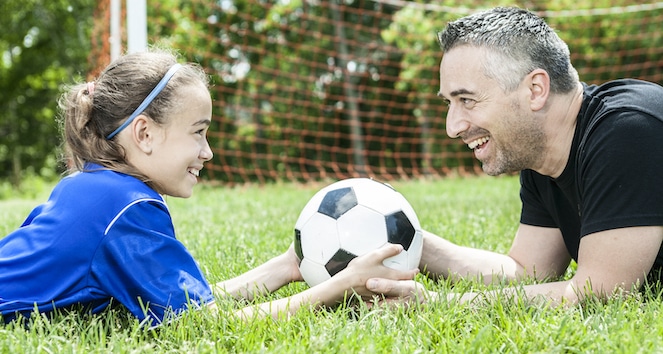
Here are some of the biggest reasons every student-athlete should keep playing pickup.
You Remember Why You Fell in Love with Your Sport
Somewhere along the journey, sports can become a job. Schedules become packed. Every game matters. Statistics are analyzed over and over. And every mistake feels costly.
When athletes play only for outcomes, like winning championships, earning playing time, impressing college coaches, making the next team, or thinking they have to be perfect, they can begin losing the joy that brought them to the sport in the first place.
Pickup games remove much of that pressure. You compete because you want to, not because someone expects you to.
Researchers studying youth sport motivation consistently find that enjoyment is one of the strongest predictors of long-term participation and continued athletic development. Athletes who genuinely enjoy their sport are also more likely to stay engaged, work harder, and avoid burnout.
Sometimes the best thing an athlete can do for their performance is simply remember that sports are supposed to be fun.
You Can Experiment Without Fear
During a championship game isn’t usually the time to try something new. Pickup games give athletes permission to experiment. Trying to use your non-dominant hand, or throwing a different pitch, using a weaker foot, working on a new serve, or just trying to be more vocal can all be worked on with no one watching or judging or keeping stats.
Athletes can just go for it.
Because the consequences are lower, athletes often become more creative.
Many of the greatest athletes in history developed signature moves during informal play. Not through structured practice.
Growth often happens when athletes feel safe enough to fail.
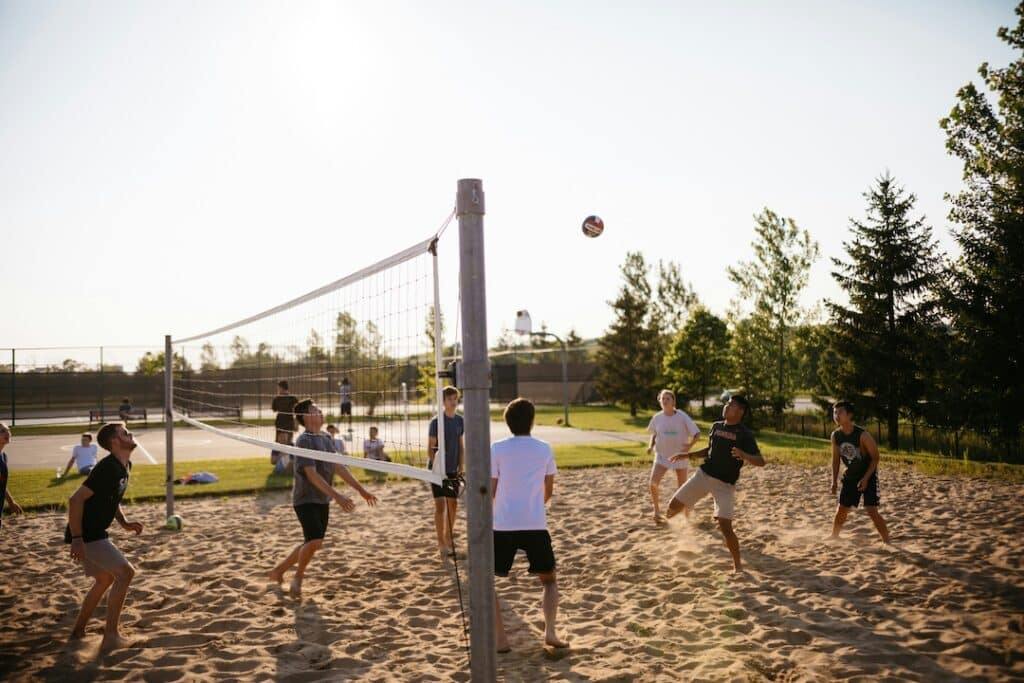
You Learn to Solve Problems Without a Coach
One of the biggest differences between organized sports and pickup games is simple:
- No one is calling the plays.
- Athletes must figure things out together.
- Who guards whom?
- What’s the strategy?
- Who brings the ball up?
- Who takes the final shot?
- How do we adjust if something isn’t working?
These moments develop decision-making skills that transfer directly into organized competition.
Sports psychologists have long emphasized that athletes develop confidence when they are allowed to make decisions independently rather than constantly relying on external instruction.
College coaches consistently value athletes who can think, and talk, for themselves.
Pickup sports provide that opportunity.
Leadership Happens Naturally
In organized sports, leadership roles are often assigned. Captains are chosen and coaches determine responsibilities.
Pickup sports work differently. Leadership is earned. Someone organizes the game. Teammates encourage each other. They settle disagreements on their own. Someone makes sure everyone gets involved.
There aren’t official titles, but roles are filled and authentic leadership moments just happen naturally.
Future college athletes, and future professionals, benefit enormously from learning how to influence people without relying on authority.

You Learn to Play With Different People
Travel teams often keep athletes in the same circles for years.
Pickup games expose athletes to new teammates. Athletes play with different ages, personalities, skill levels, and backgrounds.
Sometimes you’ll be the best player and other times you’ll be the least experienced.
Either way, you’ll be learning valuable lessons.
Learning to communicate with different teammates prepares athletes for the reality of college athletics, where every roster is filled with people from different cities, states, cultures, countries, and experiences.
Adaptability is a competitive advantage.
You Learn How to Choose—and Be Chosen
One forgotten part of pickup sports is selecting teams. Sometimes you choose and other times someone chooses you.
Both experiences teach humility, confidence, and emotional resilience. Athletes quickly learn that being a great teammate often matters just as much as being the most talented player.
People want to play with athletes who compete hard, encourage others, communicate well, and make the game enjoyable.
Those same qualities make athletes attractive to college coaches.

Competition Doesn’t Always Have to Be So Serious
Today’s athletes compete almost year-round.
Every weekend feels important. Every tournament carries high expectations. And every mistake is captured on video.
Pickup sports remind athletes that competition can still be joyful.
Yes, everyone wants to win. But tomorrow everyone usually comes back and plays again no matter the outcome.
This healthier relationship with competition helps athletes develop resilience while reducing some of the anxiety that often accompanies high-pressure youth sports.
Researchers have linked excessive performance pressure with increased stress, anxiety, athlete burnout, while opportunities for self-directed free play support motivation, creativity, and emotional well-being.
Your Athletic IQ Improves
One of the biggest advantages of pickup games is the number of decisions athletes make.
There are fewer stoppages, less coaching, and more continuous play. Athletes learn to read situations faster, recognize patterns, catch their own mistakes, adjust on the fly, and solve problems in real time.
This type of “game intelligence” is difficult to teach in drills alone. The more situations athletes experience, the more instinctive their decision-making becomes.
That’s one reason many elite athletes across multiple sports credit informal play as an important part of their development.
Believe it or not, some college coaches allow their athletes to free play in college. Some build it right into their practices.

Lessons for Parents
Parents naturally want to provide every opportunity for success.
Private lessons, club teams, showcases, travel opportunities. These investments can absolutely help. But don’t underestimate the value of unstructured play.
Sometimes your athlete doesn’t need another lesson. They simply need a basketball, a soccer ball, a tennis racket, a glove, or a few friends.
Allow them time to play because they love playing. Ironically, this may help them improve faster than adding another scheduled event to an already crowded calendar.
Lessons for Coaches
Great coaches build skilled athletes. Exceptional coaches also build lifelong competitors.
Encourage your athletes to play outside organized practice. Celebrate creativity. Support multi-sport participation when appropriate. Value leadership that develops away from your program.
The goal isn’t simply to produce better players. It’s to develop adaptable, confident young adults.
The Find My Team Perspective
College coaches are looking for more than statistics.
They’re looking for:
- Competitors
- Leaders
- Problem-solvers
- Communicators
- Great teammates
Pickup sports quietly develop every one of those characteristics.
At Find My Team, we often remind families that the recruiting process isn’t just about building a résumé. It’s about becoming the kind of athlete coaches want in their locker room.
Sometimes that growth doesn’t happen under bright lights. Sometimes it happens on a neighborhood court, a local field, a sand volleyball court, or a community gym where the only prize is getting to play one more game.
So the next time someone texts, “Want to play pickup?” don’t dismiss it as just another afternoon. It might be one of the most valuable training sessions you’ll have all year. Because the best athletes never stop competing.
More importantly, they never stop playing.